
New Energy V2X Discharging Technology
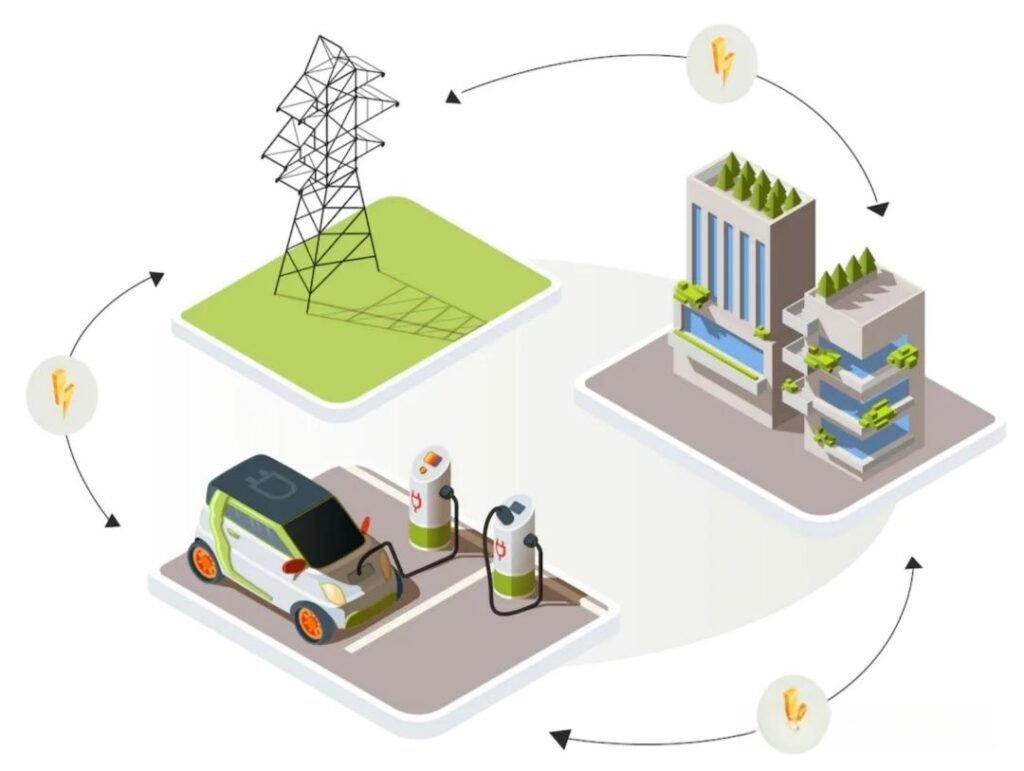
What is V2X?
V2X is a general term for electric vehicle bidirectional charging technology. Different terms are used to distinguish based on where the electricity from electric vehicles is used, including V2G (Vehicle-to-Grid), V2H (Vehicle-to-Home), V2B (Vehicle-to-Building/Business), V2V (Vehicle-to-Vehicle), V2L (Vehicle-to-Load), V2F (Vehicle-to-Factory), etc. In fact, these are the results of different usage scenarios and meeting different user needs. Of course, essentially, they are all the same: using electric vehicles as distributed power sources to supply power to different loads. This can also be said to be a form of distributed energy storage.
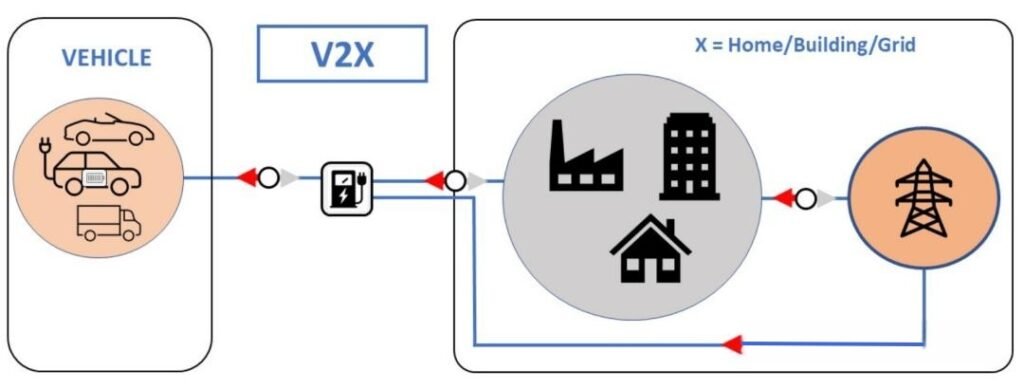
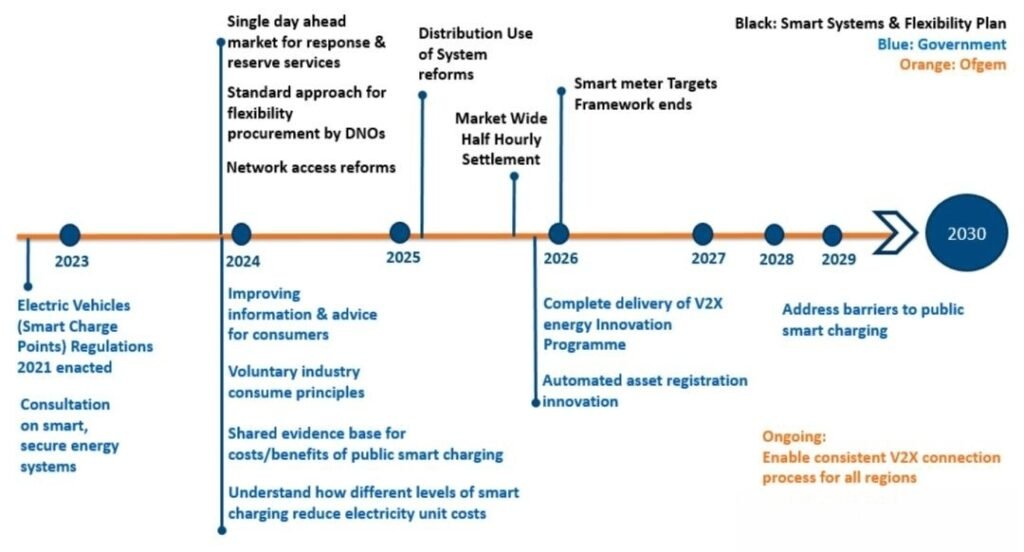
The UK government's plan for the development of V2X
V2G
V2G, or Vehicle-to-Grid, refers to the interaction between vehicles and the grid. In the V2G mode, electric vehicles are like mobile power banks, which can adjust charging time and charging power according to the needs of the power grid. When the vehicle is not in use, it can discharge electricity through V2G terminals based on the grid’s requirements. With the growth of the scale of electric vehicles and the improvement of power battery technology, electric vehicles, as a distributed energy storage device, can not only meet users’ travel needs but also discharge electricity back to the power grid.
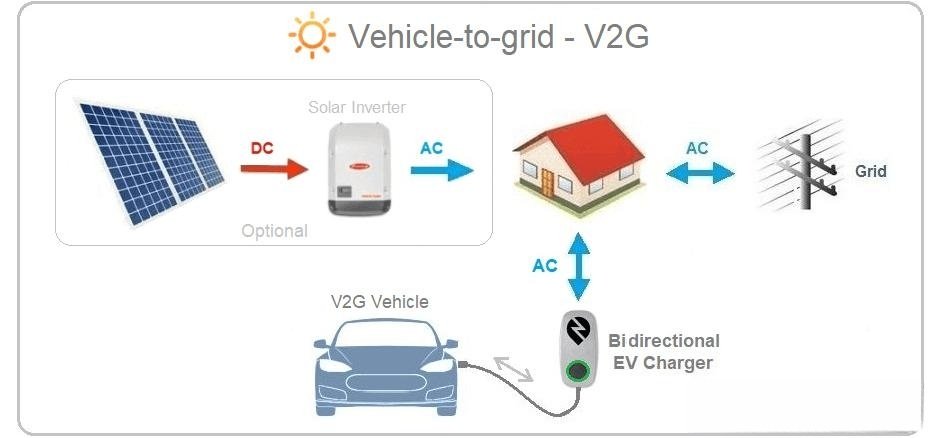
V2G System Block Diagram
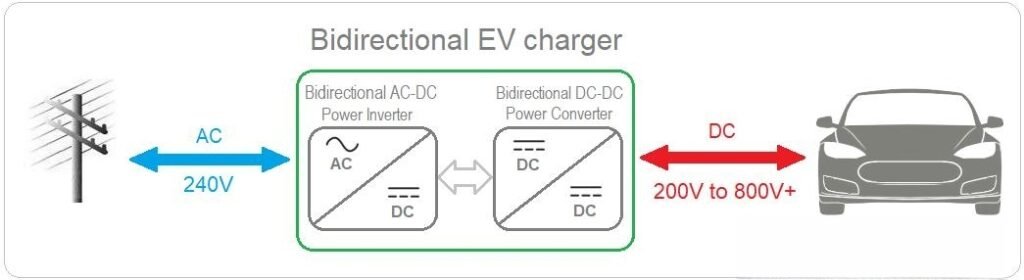
Working principle of bidirectional charging
According to the UK’s Electric Vehicle Smart Charging Action Plan released by Ofgem earlier this year, by 2030, the number of electric vehicles in the UK will reach 10 million, and the electricity demand from electric vehicles will account for a significant portion of the UK’s total electricity. Therefore, it is necessary to use new technologies to ensure that the right energy is provided to the right people at the right time and at the right price. As stated in the report, starting from 2022, newly installed charging stations in the UK will be equipped with smart charging functions (such as V2G).
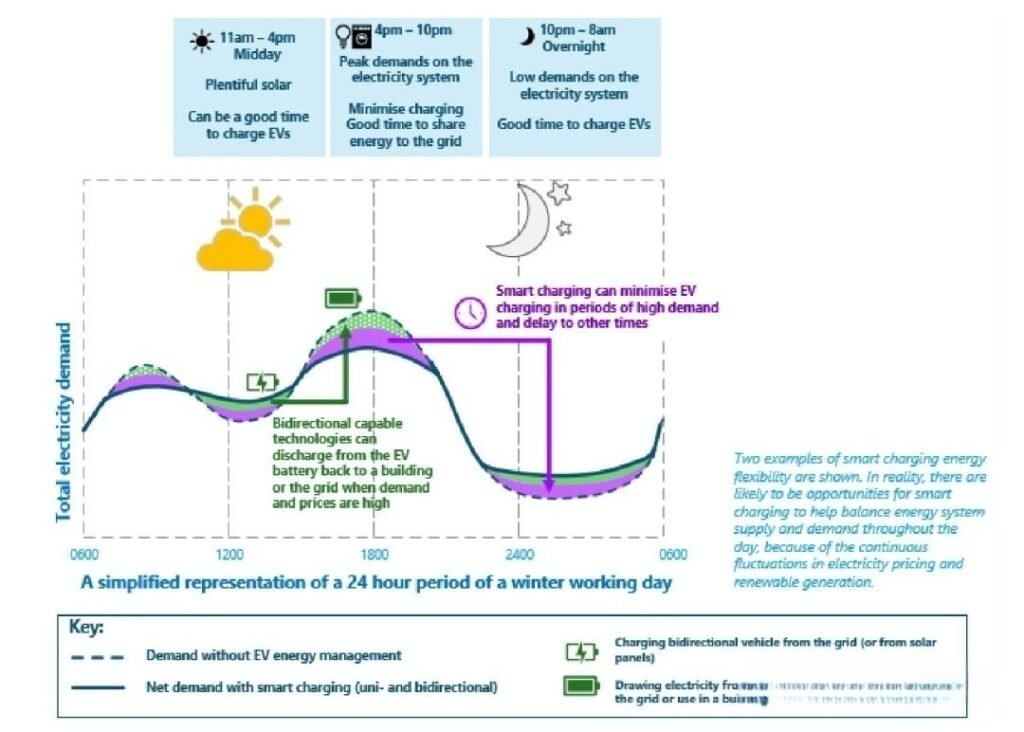
Chart of Power Demand Trends
As can be seen from the above chart, electricity demand is relatively high between 8 a.m. and 10 p.m., with the maximum demand usually occurring between 4 p.m. and 10 p.m. in winter. We can use V2G (Vehicle-to-Grid) to discharge electricity to the power grid during peak electricity consumption periods and charge electric vehicles during off-peak periods. This can generally minimize the investment costs of power generation capacity and the power grid (cables and other electrical equipment), and also reduce carbon dioxide emissions.
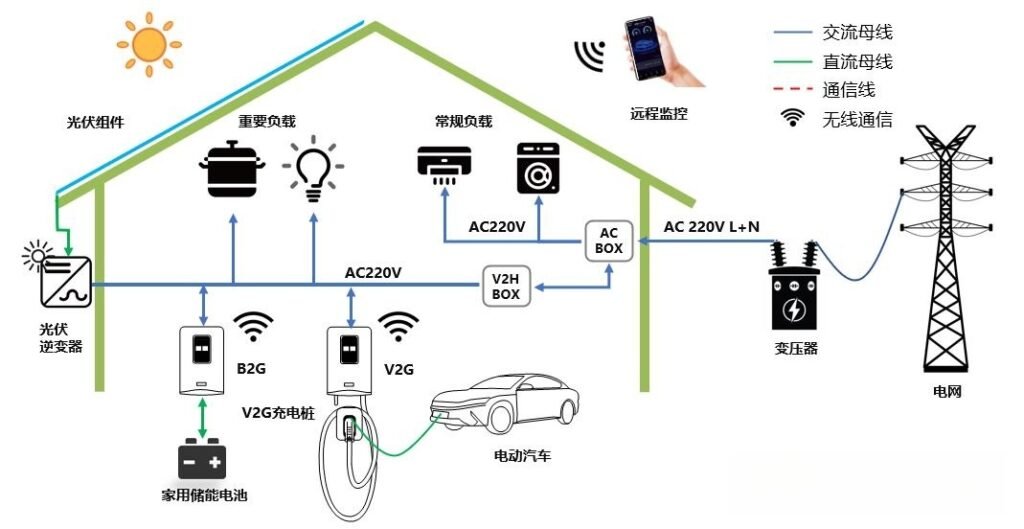
V2G can also be linked with solar and wind energy storage systems, allowing electricity generated by solar and wind energy to be reversely output to the power grid through intelligent converters.
With the expansion of mobile energy storage vehicles and new energy vehicles, the connection between transportation (electric vehicles) and the power grid will become increasingly close, which will accelerate the development of V2G to a certain extent. On the one hand, mobile energy storage vehicles participate in peak shaving and valley filling, are compatible with V2G charging and discharging functions, and can charge new energy vehicles and supply power to mobile communication base stations anytime and anywhere. On the other hand, some domestic mainstream new energy vehicle brands such as GAC, Geely, Great Wall, and NIO have or are researching vehicles equipped with V2G functions.
The industry has carried out active attempts and some commercial applications have been launched. Among them, State Grid Electric Vehicle Service Co., Ltd. has currently built nearly 50 V2G vehicle-grid interaction projects in 15 provinces and cities including Zhejiang, Shanghai, Jiangsu, and Hebei. It has developed more than 10 V2G vehicle models with multiple domestic automakers, and a total of nearly 4,000 electric vehicles have participated in vehicle-grid interaction.
Although many domestic and foreign vehicle models currently have bidirectional discharge functions and have realized V2V (Vehicle-to-Vehicle) and V2L (Vehicle-to-Load) functions, the large-scale implementation of V2G still has a long way to go due to factors such as current regulations, business models, and the number of electric vehicles in use. The newly released ISO 15118-20 last year also defined the communication for V2G. Prior to this, CHAdeMO also made relevant definitions for V2G, and Nissan Leaf also launched models with discharge functions.

Another important move by an automaker that cannot be ignored here is Tesla. People may wonder why Tesla hasn’t launched many of its own V2G products so far. The possible reasons are as follows:
1. Previously, the number of Tesla vehicles in circulation was relatively small, which was insufficient for V2G implementation. Its sales have seen explosive growth only in the past two or three years, quickly exceeding 1 million units. However, given Tesla’s consistent approach, its hardware should be capable of supporting V2G. Once the time is right, a software upgrade will enable Tesla vehicles to become energy storage devices with both charging and discharging capabilities.
2. It is mainly related to the lifespan of battery cells. V2G will increase the number of charge-discharge cycles of the cells and accelerate their typical degradation, which has a certain impact on battery life. Since vehicles are still primarily used as a means of transportation, severe degradation of Tesla’s vehicle batteries is unacceptable to both Tesla itself and its users.
Of course, Tesla’s current layout for V2G can be said to be quite proactive and forward-looking, mainly including:
1. It already has its own solar photovoltaic products.
2. It has been vigorously promoting its energy storage products such as Powerwall, Powerpack, and MegaPack on a large scale. Tesla’s home energy storage system, Powerwall, can realize coordinated dispatching with the power grid through V2G technology, outputting energy from the energy storage system to the grid for applications such as participating in electricity market transactions. This provides a foundation for Tesla to further expand the application of V2G technology.
3. The application and layout of large-scale supercharging piles. Tesla is continuously upgrading and improving its supercharging piles. In addition to providing fast charging services for Tesla electric vehicles, these piles can also output energy to the power grid through V2G technology in the future, providing energy regulation and reserve services for the grid.
4. It has laid out Autobidder, a platform supporting online energy currency transactions. This platform can utilize Tesla’s energy storage systems and V2G technology to provide energy for participation in transactions in the electricity market. Through Autobidder, Tesla can realize commercial applications such as selling energy from energy storage systems to the grid or participating in electricity market transactions.
V2G is not merely a technical issue; it involves multiple aspects such as system integration, business models, electric vehicles, energy storage, energy companies, governments, and power grids. Tesla’s current layout in various aspects will undoubtedly provide significant support for the future promotion of V2G. Eventually, the combination of low-cost/high-lifespan battery cells, a million-level fleet, photovoltaic power generation, energy storage, and the energy trading platform Autobidder will form the platform foundation for Tesla’s V2G.
In the future, if you have a car with V2G functionality, you can buy electricity from the grid when the price is low and sell it to the grid when the price is high, thereby gaining certain benefits. It can be said that this will enable a win-win situation for all stakeholders in the industrial chain.
While V2G offers numerous benefits and represents a crucial trend in future energy development, it still faces many constraints at present.
1. Lack of standardization: There is currently no universal standard protocol for V2G communication and interaction with the power grid, making it difficult for different V2G systems to interoperate.
2. High costs: The cost of bidirectional charging systems remains relatively high, which has led to insufficient investment enthusiasm at present.
3. Inadequate regulatory environment: The regulatory environment surrounding V2G technology is still uncertain, with different countries, regions, and grid operators having varying regulations and incentive measures.
4. Safety measures: There are concerns about the safety of V2G systems, especially in the event of grid failures. Bidirectional inverters must be disconnected from the grid during maintenance to ensure no mutual interference.
5. Limited availability of electric vehicles: There are few electric vehicles compatible with V2H (Vehicle-to-Home). Currently, due to range anxiety and worries about battery life, most users are unwilling or find it difficult to accept connecting their electric vehicles to the grid.

The following are global pilot cases of V2G technology:
I. Overseas
1. In June 2017, Japanese electric power company TEPCO announced that it would launch a V2G pilot project in Tokyo, which would use 20 Nissan LEAF electric vehicles.
2. In October 2018, TEPCO announced that it would launch a V2G pilot project in Fukushima Prefecture, using 30 Nissan LEAF electric vehicles.
3. In June 2019, American electric power company Duke Energy announced that it would carry out a V2G pilot project in the Carolinas, with 2 Nissan LEAF electric vehicles used in the project.
4. In January 2020, Dutch energy company Eneco announced that it would cooperate with EVBox in the Netherlands to launch a V2G pilot project, which would use 40 electric vehicles.
5. In June 2020, TEPCO announced that it would launch another V2G pilot project in Tokyo, using 50 Nissan LEAF electric vehicles.
6. In December 2020, the European Commission released a strategic document aimed at promoting the popularization and application of V2G technology in Europe.
7. In January 2021, British energy company Octopus Energy announced that it would cooperate with the UK National Grid to launch a V2G pilot project, which would use 135 Nissan LEAF electric vehicles.
8. In June 2021, German energy company E.ON announced that it would cooperate with Nissan of the Netherlands to carry out a V2G pilot project, which would use 60 Nissan LEAF electric vehicles and 30 household solar panels.
9. In August 2021, American electric power company Con Edison announced that it would carry out a V2G pilot project in Queens, New York City, using 15 electric vehicles.
10. In September 2021, French energy company EDF announced that it would launch a V2G pilot project in the Paris area, with 60 electric vehicles used in the project.
11. In January 2022, British energy company Centrica announced that it would cooperate with the UK National Grid to launch a V2G commercialization project, which would use 200 Nissan LEAF electric vehicles.
12. In January 2022, Canadian electric power company BC Hydro announced that it would carry out a V2G pilot project in Vancouver, British Columbia, using 20 electric vehicles.
13. In February 2022, British energy company Shell Energy announced that it would cooperate with OVO Energy in the UK to launch a V2G pilot project, which would use 350 electric vehicles.
II. Domestic:
1. In June 2018, Guangdong Power Grid Company announced that it would pilot a V2G project in Zhuhai City, which would use 40 new energy vehicles.
2. In July 2018, State Grid Shandong Electric Power Company announced that it would carry out a V2G pilot project in Qingdao City, using 100 new energy vehicles.
3. In April 2019, Nanjing City signed a cooperation agreement with Southeast University to jointly promote the application and popularization of V2G technology in Nanjing.
4. In September 2019, Huaneng Power International announced that it would launch a V2G pilot project in Tongzhou District, Beijing, using 50 new energy vehicles.
5. In May 2020, Jiangsu Electric Power Company announced that it would carry out a V2G pilot project in Nanjing City, with 50 new energy vehicles used in the project.
6. In July 2020, China’s National Energy Administration released the “New Energy Vehicle Industry Development Plan (2021-2035)”, which clearly defined the development goals and directions for new energy vehicles and V2G technology in the future.
7. In April 2021, State Grid Shandong Electric Power Company announced that it would carry out a V2G pilot project in Yantai City, using 200 new energy vehicles.
8. In May 2021, Huaneng Power International announced that it would launch a V2G pilot project in Hangzhou City, Zhejiang Province, using 100 new energy vehicles.
9. In June 2021, State Grid Corporation of China announced that it would carry out a V2G pilot project in Huairou District, Beijing, using 100 new energy vehicles.
10. In September 2021, China FAW Group announced that it would launch a V2G pilot project in Hebei Province, using 100 pure electric vehicles.
11. In February 2022, State Grid Corporation of China announced that it would launch a V2G pilot project in Wenzhou City, Zhejiang Province, using 200 new energy vehicles.
12. In February 2022, Ningxia Hui Autonomous Region Electric Power Company announced that it would launch a V2G pilot project in Yinchuan City, using 100 new energy vehicles.
13. In March 2022, Shanghai Electric Power Company announced that it would launch a V2G pilot project in Putuo District, Shanghai, using 50 new energy vehicles.
V2H
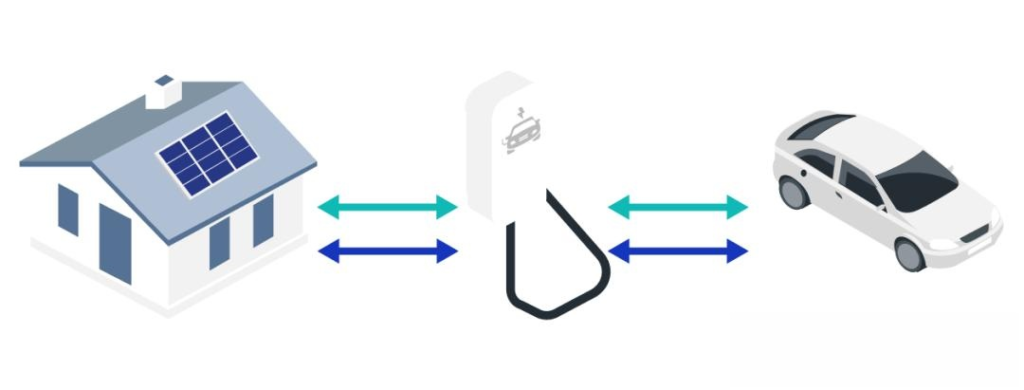
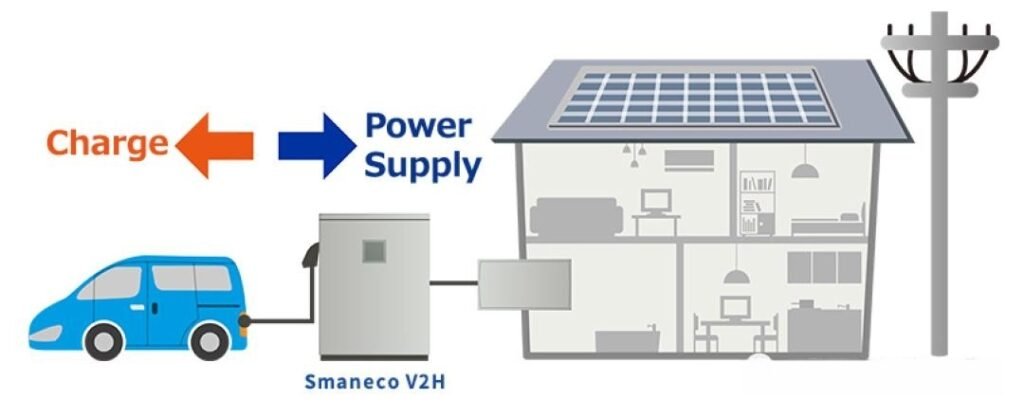
V2H, similar to V2G, involves connecting an electric vehicle to a home power grid. The battery of the electric vehicle can serve as a backup power source for the home grid, to be used in emergencies or when the grid is cut off. When the electric vehicle is not in use, it can be connected to the home grid, and the energy stored in its battery can be supplied to household appliances. Through an intelligent control system, the output voltage and current of the electric vehicle’s battery can be controlled to meet the needs of household electricity consumption.
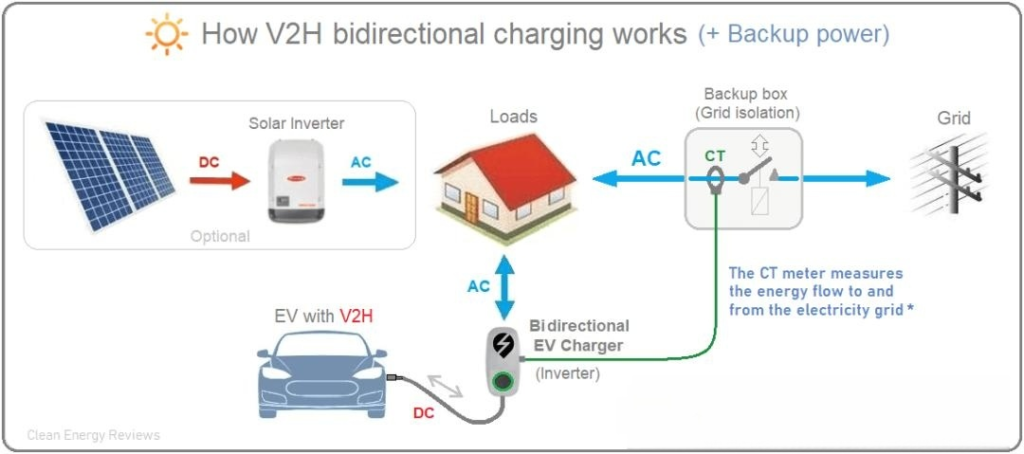
Block Diagram of V2H System
To enable V2H to operate properly, a compatible bidirectional charger and additional equipment are required, including an electricity meter (CT meter) that must be installed at the main grid connection point. The CT meter monitors the energy flow into and out of the power grid. When the system detects that the home needs electrical energy, it sends a signal to the electric vehicle’s bidirectional charger to release energy, thereby supplying power to the home. Similarly, when the system detects energy output from the rooftop solar panel array, it switches to charging the electric vehicle. If backup power (from the vehicle) is to be activated in the event of a power outage or emergency, the V2H system must be able to detect the grid interruption and isolate itself from the electrical network using an automatic contactor (switch).
V2H technology still has many advantages in the future development of energy. Firstly, it can convert the battery of an electric vehicle into a home backup power source, improving the reliability of home power supply and reducing the risk of home power outages. Secondly, V2H technology can increase the utilization rate of electric vehicles, making them a more intelligent and environmentally friendly means of transportation, while also reducing household electricity costs. Finally, V2H technology can provide families with more green energy options and promote energy transition.
Of course, V2H still has some limitations at present. Firstly, due to the limited battery capacity of electric vehicles, V2H technology can only serve as a short-term backup power source and cannot replace the home power grid. Secondly, current V2H technology requires specialized hardware facilities, which are relatively costly and need further cost reduction. Finally, the current V2H technology also needs to further improve its intelligent control system to better control the output voltage and current of the battery, so as to meet the electricity needs of different households.
In general, V2H technology is still a promising energy technology. With the increasing global demand for renewable energy, the reduction of costs, the improvement of technology, and the integration of related industrial chains, V2H technology will become one of the important directions in future energy development.
At present, there are relatively few vehicles that truly implement V2H. For example, the Nissan Leaf and Mitsubishi Outlander PHEV, which use the old CHAdeMO interface; the new Ford F-150 Lightning EV can operate in V2H mode using a CCS connector through its on-board bidirectional charger. However, it can only be used with the Ford Charge Station Pro and the Ford Home Integration System.
However, there are currently many global V2H pilot projects. The following are some case studies to explore the commercial value of V2H technology.
1. In 2012, a Japanese electric power company launched a pilot project called “V2Hコンセプト” (V2H Concept), aiming to test the feasibility of using electric vehicles as home backup power sources.
2. In 2013, the UK’s National Grid collaborated with British electric power companies to launch a V2H pilot project, providing participants with converters for converting the energy stored in electric vehicles into household electricity.
3. In 2015, Dutch energy company Alliander initiated a pilot project named “Smart Grids, Smart Charging, Smart Living”, which aimed to test the feasibility of using electric vehicle energy storage for household emergency power supply.
4. In 2016, Australian energy company AGL partnered with Japanese automaker Nissan to launch a V2H pilot project, using electric vehicles as backup power sources to provide participants with additional electricity supply.
5. In 2018, Italian energy company Enel collaborated with Italian automaker FCA to launch a V2H pilot project called “Vehicle-to-Grid”, with the goal of testing the feasibility of using electric vehicle energy storage for household electricity.
6. In 2019, American energy company Con Edison, in cooperation with the New York City Transit Authority, started a V2H pilot project to test the feasibility of using electric vehicle energy storage for household emergency power supply.
7. In 2020, Norwegian energy company Agder Energi joined hands with Norwegian electric power companies to launch a V2H pilot project named “Smartly Charging Electric Vehicles”, aiming to test the feasibility of using electric vehicle energy storage for household emergency power supply and energy balance.
8. In 2021, American electric power company Duke Energy launched a V2H pilot project called “Vehicle-to-Home”, which aimed to test the feasibility of using electric vehicle energy storage for household electricity and provide integration with home solar panels and home energy storage devices.
9. In 2021, a Japanese electric power company and Mitsubishi Motors collaborated to launch a V2H pilot project named “V2H X”, aiming to test the feasibility of using electric vehicle energy storage for household emergency power supply and daily household electricity, as well as explore the commercial application of V2H technology.
10. In 2022, Norwegian energy company Fortum partnered with Norwegian electric power companies to launch a V2H pilot project called “Electric Vehicle Flexibility”, which aimed to test the use of electric vehicle energy storage to provide flexible power services such as frequency regulation and grid stability.
11. In 2022, British energy company Octopus Energy collaborated with British automaker Jaguar Land Rover to launch a V2H pilot project named “V2H by Octopus”, aiming to test the feasibility of using electric vehicle energy storage for household emergency power supply and reducing energy costs, as well as provide integration with smart home systems.
V2V/V2L
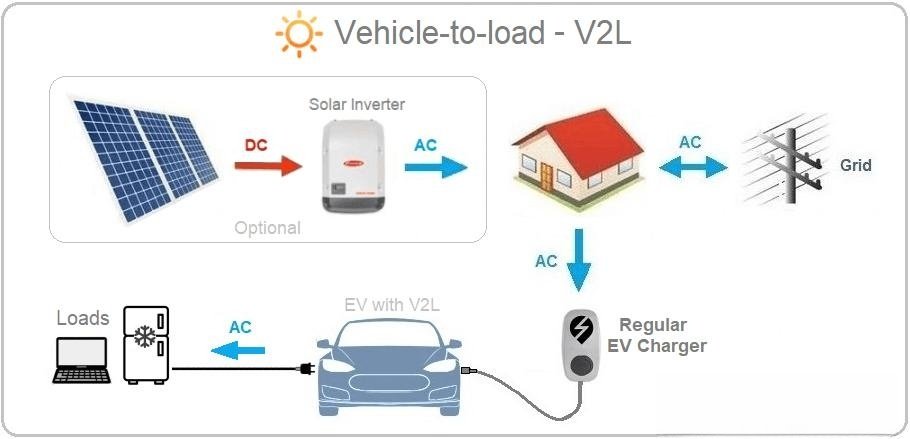
V2V and V2L operate on principles similar to V2H, with differences only in the objects they supply power to and their usage scenarios. V2V is used for vehicle-to-vehicle discharging, applicable to scenarios such as recharging other vehicles and emergency rescue. V2L, on the other hand, is applied in scenarios like outdoor lighting and picnics. Currently, most domestic vehicle models are equipped with V2V and V2L functions.
Block Diagram of V2L System
In short, in the long run, V2X is likely to completely change the way power grids operate and even our lifestyles, and electric vehicles will also take on new vitality in new fields.