
Overview of India's Electric Vehicle Charging Standards
India possesses the world’s second-largest road network, with road transport accounting for nearly 64% of the country’s total freight movement and approximately 90% of its passenger traffic. Simultaneously, as the world’s most populous nation (the latest 2023 statistics confirm India’s population has surpassed China’s), India is poised to align with the global trend toward electrification amid worldwide carbon neutrality efforts. This positions the country for immense development potential and market opportunities.
However, current progress in India’s electric vehicle (EV) sector lags behind regions like China, Europe, and North America. Although the Indian government has introduced several policies to promote new energy vehicles—such as allocating 100 billion rupees under the FAME II scheme to support charging infrastructure deployment—the pace of EV adoption remains relatively slow.
#01
India’s electric vehicle (EV) market is notably unique, primarily categorized into four segments: two-wheelers (2W), three-wheelers (3W), passenger vehicles, and commercial vehicles. In 2022, India’s total EV sales reached 1,054,938 units. Among these, two-wheelers dominated with a 63% share, followed by three-wheelers at 32% (whereas in most people’s perception, only four-wheeled vehicles are conventionally considered “cars,” while two- and three-wheelers are categorized as “electric two/three-wheelers”). Sales of four-wheeled EVs accounted for merely 4%, totaling just 42,197 units. Tata Motors alone claimed 34,833 of these units. Consequently, sales of what may be considered “true” electric *cars* in India remain extremely low.
However, based on current sales figures, India’s EV market still holds significant growth potential. For Chinese automakers aiming to enter this market, it is crucial to understand India’s EV standards, particularly regarding charging—a key factor closely tied to user experience. Therefore, a thorough grasp of India’s current EV charging standards and requirements is essential.
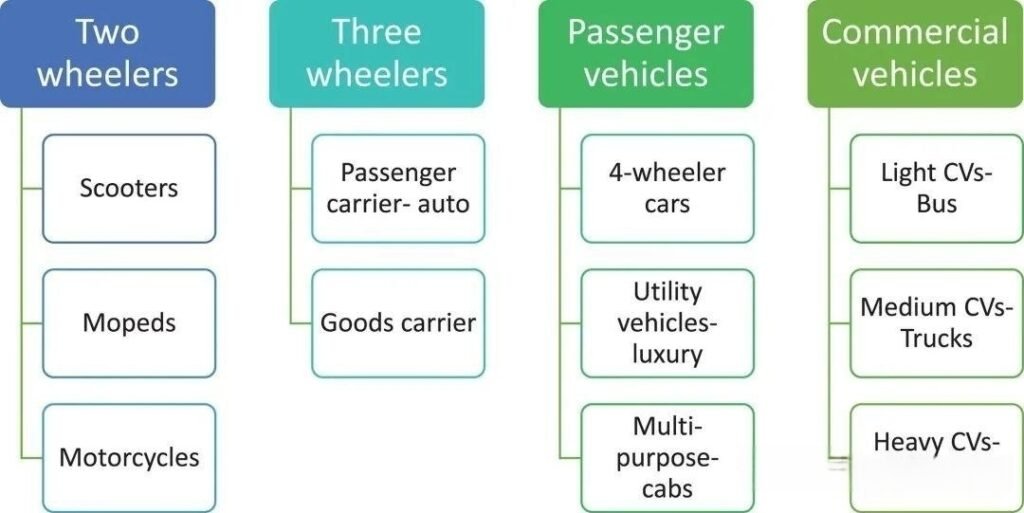
Classification of Electric Vehicles in India (Data sourced from online platforms)
The market for electric two- and three-wheelers in India is significant.
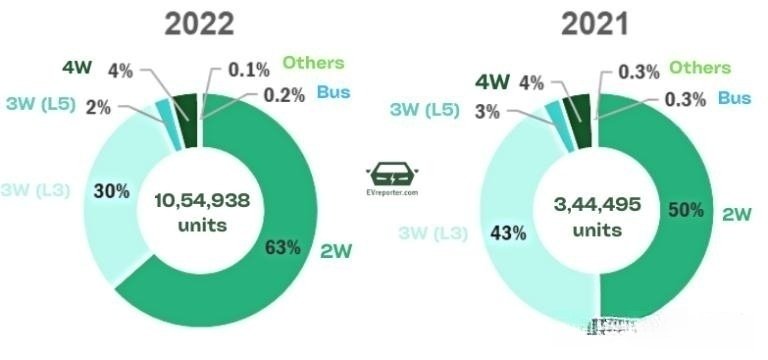
India’s Electric Vehicle Sales in 2022
#02
India primarily adheres to IEC standards among all international norms. However, it has also established its own standards to harmonize EV-related specifications with the global electric vehicle industry. These standards can be categorized by application and function within the EV ecosystem into charging, connector, safety, and communication protocols.
Regarding India’s current policies, the country accepts all major charging protocols, including CHAdeMO, GB/T, and CCS2. Although India has developed its own charging standards, manufacturers operating in the market deploy nearly all mainstream global standards—such as those from China, the US, Europe, and Japan. This reflects a fragmented regulatory landscape** for charging interfaces, lacking a unified nationwide standard.
### Key Highlights:
– **Policy Flexibility**: Openness to diverse global protocols (CHAdeMO/GBT/CCS) for market inclusivity.
– **Market Reality**: Charging infrastructure operates with multi-standard compatibility, yet standardization remains decentralized.
– **Regulatory Gap**: Absence of a mandatory national interface standard creates operational complexity.
*This fragmentation necessitates adaptability from EV stakeholders entering the Indian market.*
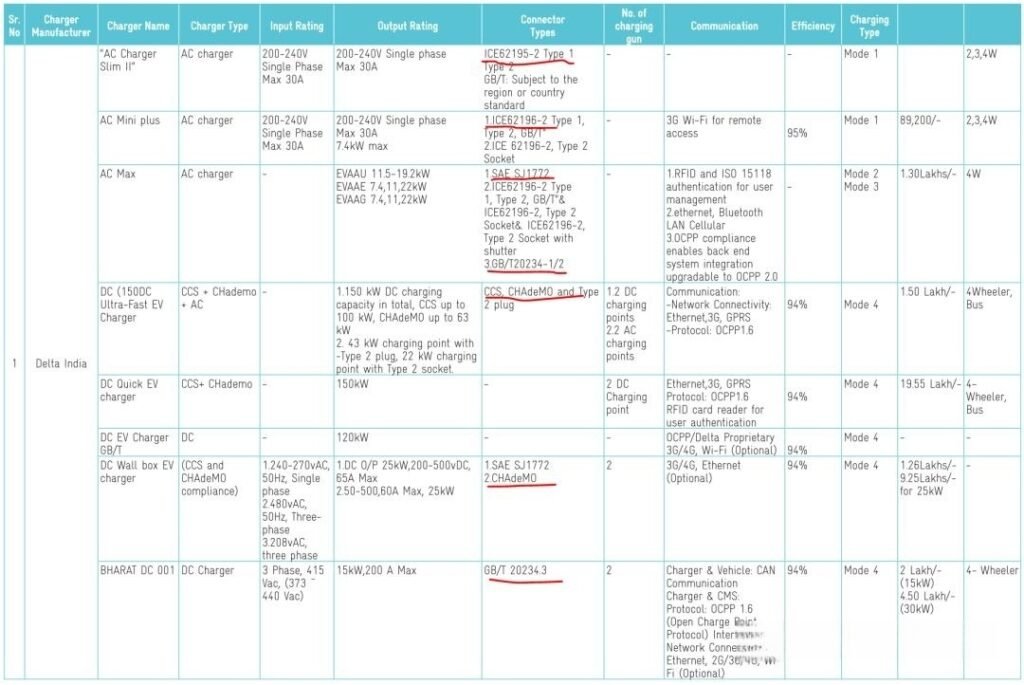
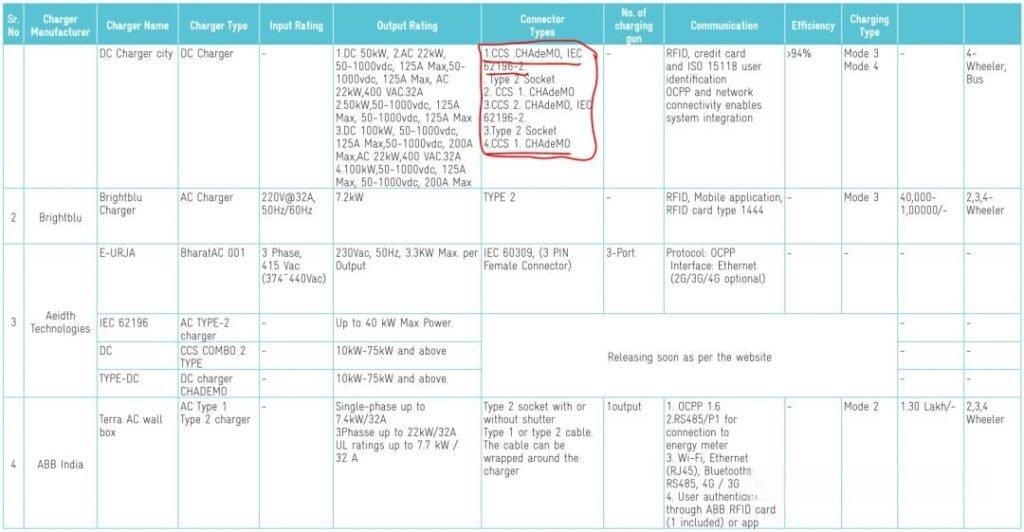
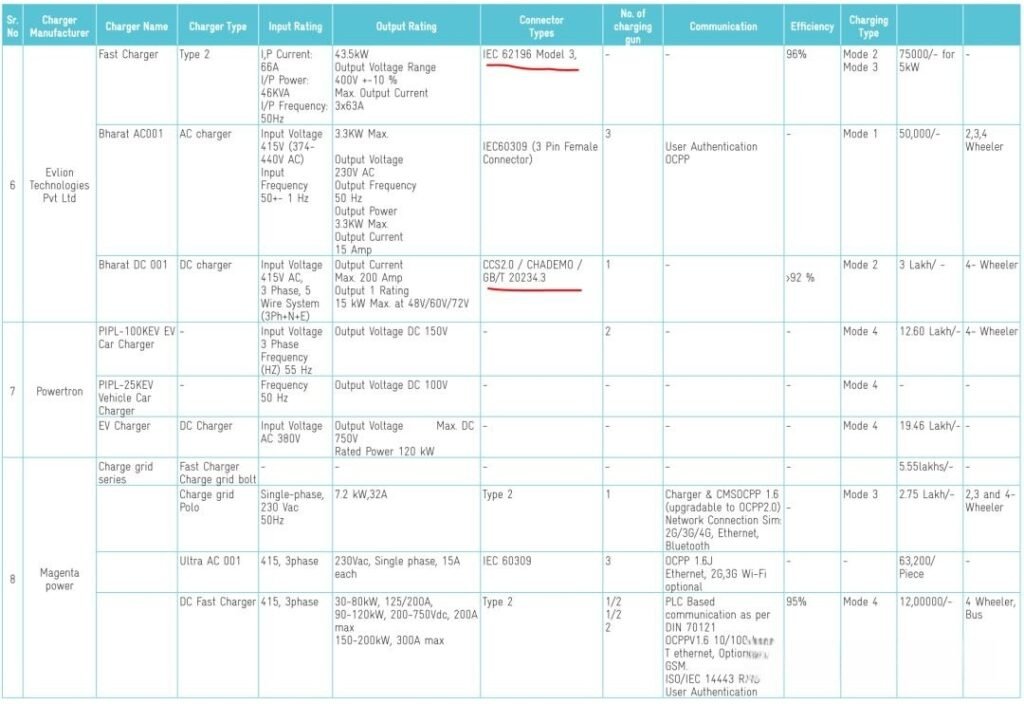
Partial information on charging stations in India
At present, the main charging interfaces in India are CCS2 and CHAdeMO, with the following main considerations:
1. High power, CCS2 can support 350kW, CHAdeMO can support 400kW of charging power.
2. CCS2 adopts an integrated interface, which occupies a small space and can support both AC and DC charging simultaneously;
3. CHAdeMO supports V2G functionality (although it is now also supported by European standards).
4. CCS2 is widely used globally, mainly in countries and regions such as Europe, the United States, and Southeast Asia.
5. CHAdeMO is widely used in countries and regions such as Europe, South Korea, and the United States.
Before 2017, the AC standards used in India were based on China’s GB/T standards, with the only difference being the requirements for voltage level and temperature. GB/T had a higher DC output voltage level, while the Indian market had the largest proportion of tricycles, resulting in lower voltages, mainly 48V, 72V, and 100V/120V. The AC and DC power limits are 10 kW and 15/20 kW. The ambient temperature range for GB/T EV plugs is from 30 ° C to+50 ° C, while for AC001/DC001 EV plugs in India, the ambient temperature range is from+0 ° C to+55 ° C (taking into account the actual temperature range in India).
The Electrical and Technical Department (ETD) 51 Committee established by the Bureau of Indian Standards (BIS) is primarily responsible for preparing the Indian Standards (IS) for EVCS. The IS 17017 series standards are the main standards for charging stations and related equipment requirements developed by India. The IS 17017 series standards are derived and adapted from the IEC 61851 series standards (not all standards are equivalent). The ISO 15118 series standards are directly adopted as India’s IS/ISO 15118 series standards.
In addition to BIS, the Ministry of Heavy Industry (DHI) and the Automotive Industry Standards Bureau (AIS) have also developed and released relevant standards for electric vehicles and electric vehicle control systems. DHI released Bharat chargers AC-001 (AC charging system) and DC-001 (DC charging system) in 2017, which adopted the GB/T (China) standard and made slight modifications to the ambient temperature related to Indian climate conditions (as mentioned above).
The AIS 138-1 and AIS 138-2 standards for charging facilities are adapted from the IEC 61851 series. The CEA regulations “Measures for Safety and Power Supply” and “Technical Standards for Grid Connection” issued by the Central Electricity Authority of India in 2019 stipulate requirements for voltage variation, frequency variation, power factor, harmonic measurement, flicker, DC injection, V2G process, charging facility safety, and other aspects. These regulations are formulated based on the IEEE 519-2014 standard for power quality requirements.
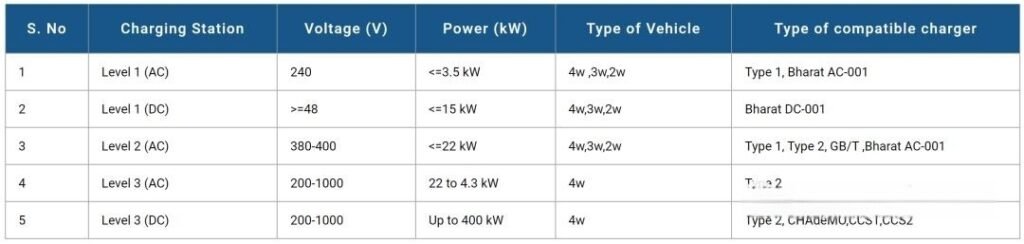
Voltage range of different charging station levels in India
#03
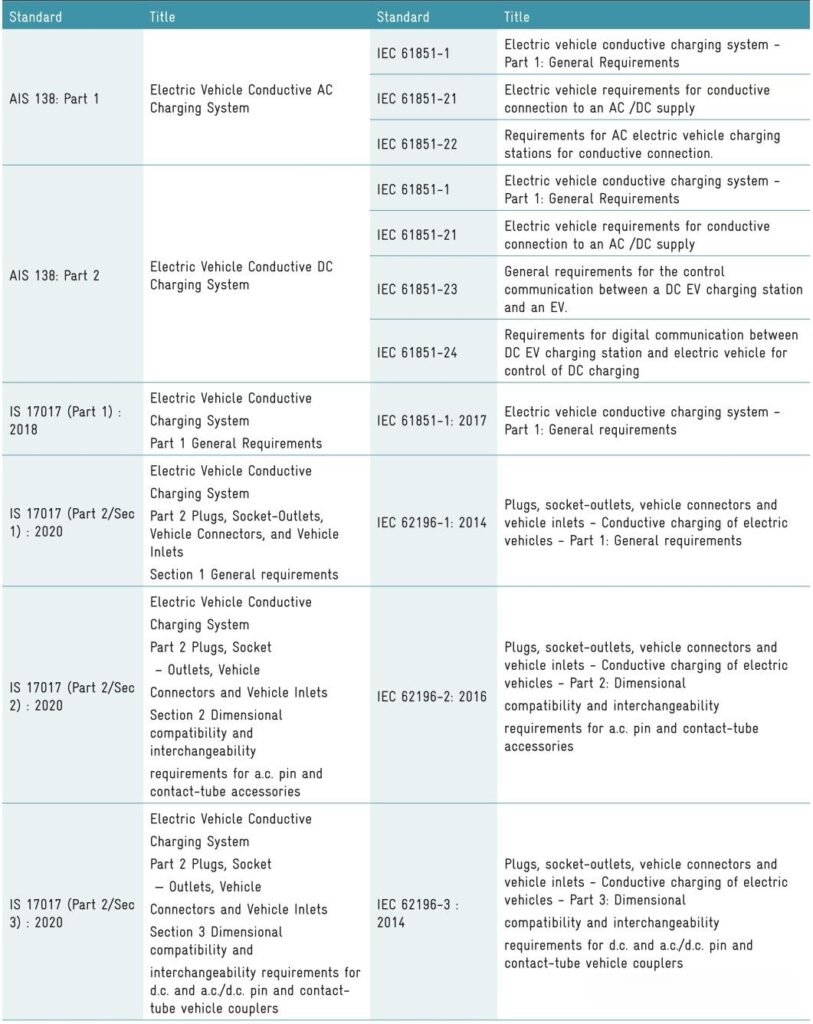
Electric Vehicle Charging Infrastructure and its Grid Integration in India
Introduction to Indian Standards
The Indian charging standards for AC and DC conduction charging provided by the Automotive Industry Standards (AIS) are named AIS 138 Part 1 and Part 2. These standards cover all aspects of conductive charging, including general requirements for charging, ratings, charging modes, connectors, safety of electric vehicle power supply equipment (EVSE), and protection against electric shock. The Bureau of Indian Standards (BIS) has also released the IS 17017 series of standards for electric vehicle power supply equipment (EVSE), connectors, socket plugs, sockets, compatibility, and interoperability.
AIS 138 Part 1 is an AC conductive charging standard released in 2017, applicable to a supply voltage of 1000V. Two AC conduction charging modes were mentioned: AC slow charging with a maximum rated current of 15A (single-phase) and AC fast charging with a maximum rated current of 63A (three-phase). Discussed the specific requirements for vehicle entrances, connectors, sockets, and plugs based on temperature, breaking capacity, lifespan, and the forces required to connect and disconnect connectors. The functional and operational requirements, including emergency services, dielectric strength, insulation, gap distance, leakage, protection, and grounding, provide guidelines for operating EVSE. Different environmental, mechanical, and electromechanical tests were also mentioned to ensure the normal operation of the equipment. This standard documents the control guidance function using PWM modulation, establishing connections between EVs and EVSEs, basic knowledge of vehicle couplers, and different connectors for AC slow and fast charging. It also mentioned the rated value of charging stations, classification of EVSE, and different cables used for AC conductive charging.
The requirements for direct current conductivity in AIS138 Part 2 were released in 2018. It is suitable for power supplies with AC or DC voltages up to 1000VAC and 1500VDC. In addition to the requirements for DC charging, chargers, and connectors, it also includes details on constant current charging and constant voltage charging modes. It also provides communication between EV and DC EVSE, including system specifications, charging status, and digital communication architecture. This standard provides information on the functions, digital communication, requirements, and key points of DC conduction charging for DC charging stations. The key contents are shown in the table below:
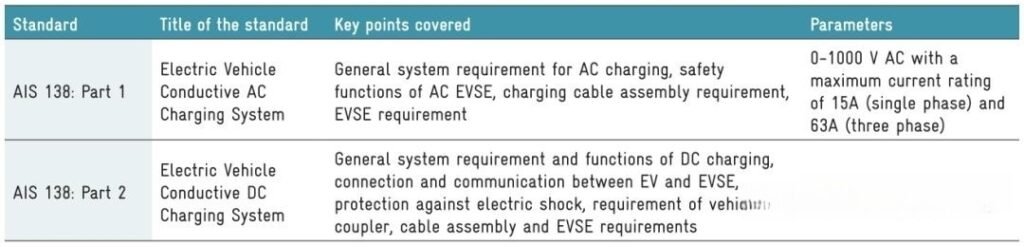
Key information of AIS138
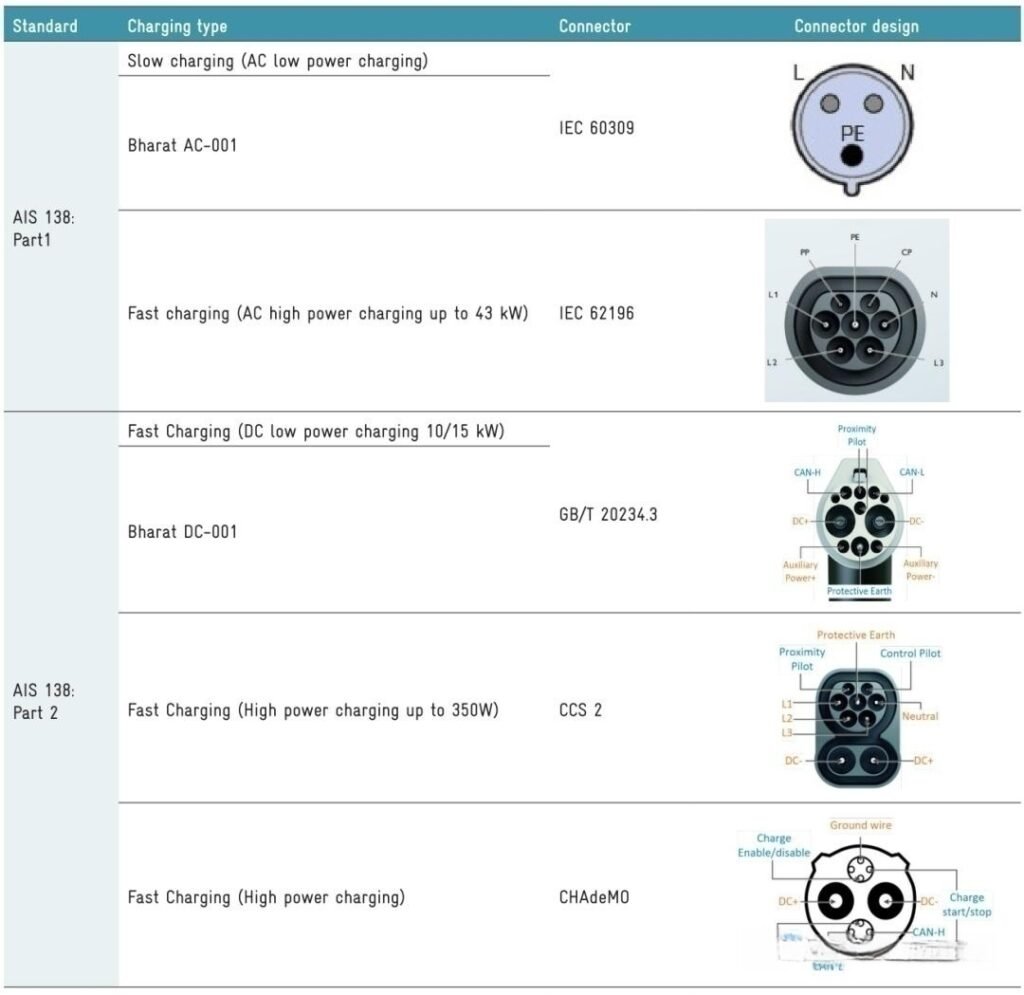
AIS138 Charging Interface Requirements
BIS launched the first electric vehicle charging standard IS 17017 (Part 1) in 2018. This standard focuses on the general requirements, characteristics, operation, and communication connection between conductive EV charging systems and EVSE. It is suitable for EV systems with power supply voltage of 1000VAC or 1500VDC and output voltage of 1000VAC and 1500VDC. This article introduces the key steps, communication structure, and process of charging initialization, charging completion, and emergency state transmission of control signals through control pins in DC charging systems. It also defines the charging mode and the minimum functionality required for different charging modes. The standard also mentions digital communication and shock protection between EVs and EVSEs under different charging modes. Detailed specifications are provided for cable components, EVSE structural requirements and testing, overload and short circuit protection, labeling, and instructions.
IS 17017: Part 2: Section 1: 2020 covers general requirements for plugs, sockets, vehicle connectors, and conductive charging sockets. This standard is applicable to systems with a rated current of 250A, a rated voltage not exceeding 690 VAC, and a rated current of 200A, a rated voltage not exceeding 1500VDC. It covers the details of wiring, terminals, ratings, connections between power sources and EVs. The key contents are shown in the table below:
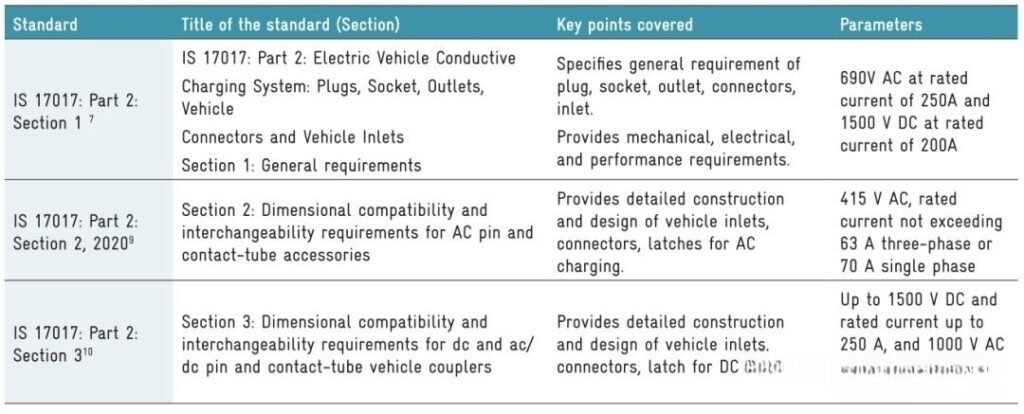
Key information of IS17017-2
IS 17017 Part 21 standardizes the electromagnetic compatibility of EV chargers and provides electromagnetic compatibility for in vehicle EVSE.
IS 17017 Part 22 Section 01: 2021 covers the conduction charging configuration of AC charging points for light electric vehicles, with a power supply voltage of 240VAC and a current of 16AAC.
IS 17017 Part 25: 2021 for DC EVSE, where protection relies on electrical isolation. Applicable to DC electric vehicles with a rated input voltage not exceeding 400VAC or 600VDC, a rated output voltage not exceeding 120VDC, and a rated output current not exceeding 100A. This standard is designated for communication between DC EVSE and EV, but it does not include bidirectional charging and DC charging requirements for heavy-duty trucks. Introduced the structural requirements and tests of DC electric vehicle power supply equipment, such as contact current, dielectric strength, overload and short-circuit protection, temperature tests, etc.
IS 17017 Part 23: 2021 covers DC EVSE with rated input voltage of 1000VAC or 1500VDC and output voltage of 1500VDC. It specifies the requirements for bidirectional charging and communication between vehicles and piles. It specifies the general requirements, modes and functions, communication, anti electric shock, structural requirements, and other related tests for DC electric vehicle power supply equipment.
Charging schemes corresponding to different charging levels in India
Due to the relatively heavy charging standards in India, there are also many power registrations, including 2 and 3 wheels, so different standards need to be applied according to different charging powers.
The following are different electric vehicle standards determined based on different charging schemes for electric vehicles:
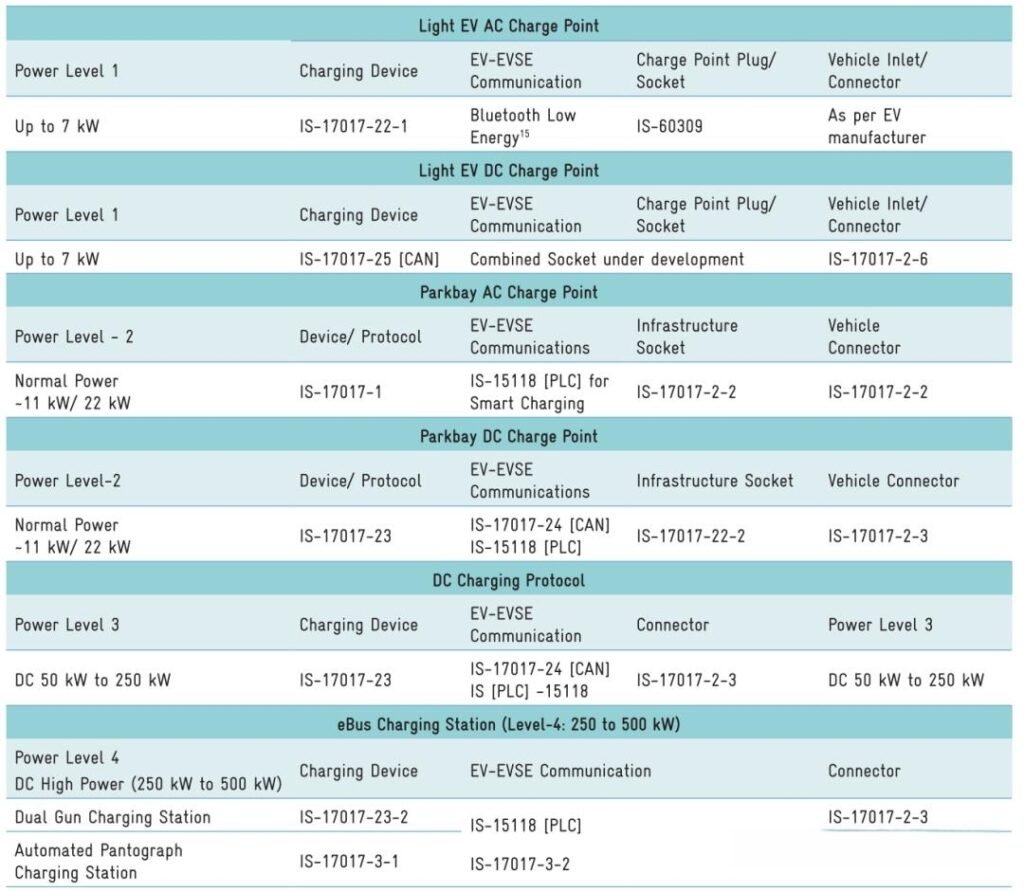
Different charging schemes and standards for electric vehicles
Standards in Compilation and Planning
The following are some standards that India is preparing and planning for, mainly involving dual gun charging, charging interfaces, communication, safety, wiring, etc. for electric buses; And battery swapping standards.
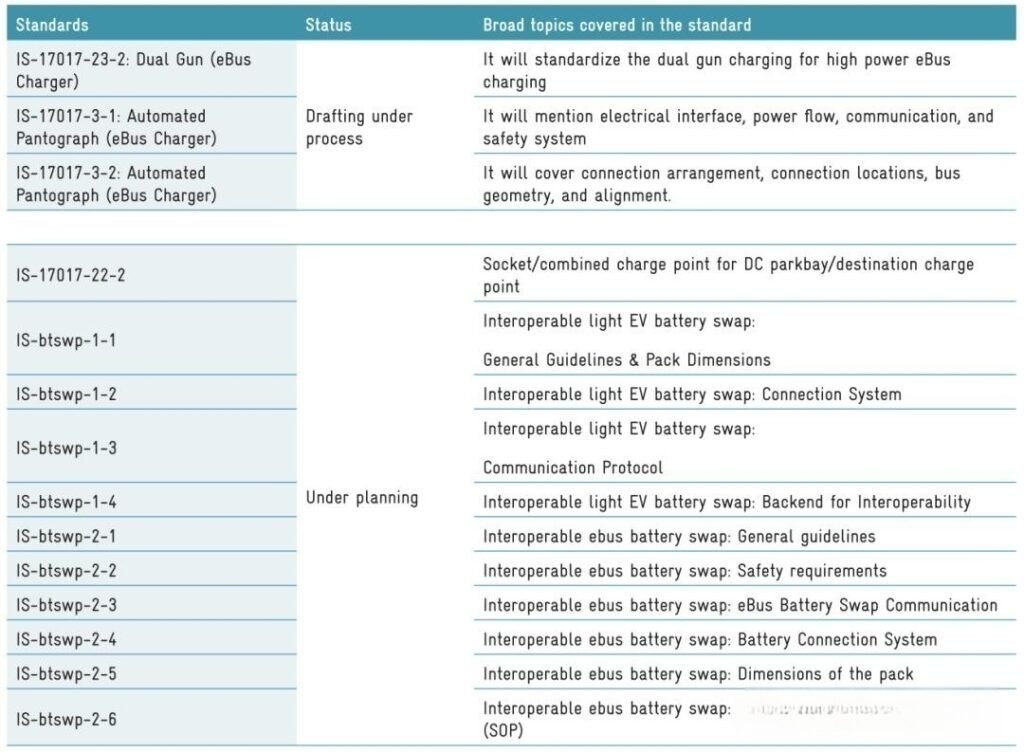
Standards in India’s Compilation and Planning
The relationship between Indian standards and other mainstream standards
Indian standards are similar to those of countries and regions such as Europe, America, and China, and can be mainly divided into four categories: system performance (electrical safety and charging performance), charging interfaces, digital communication protocols, and electromagnetic compatibility (EMC).
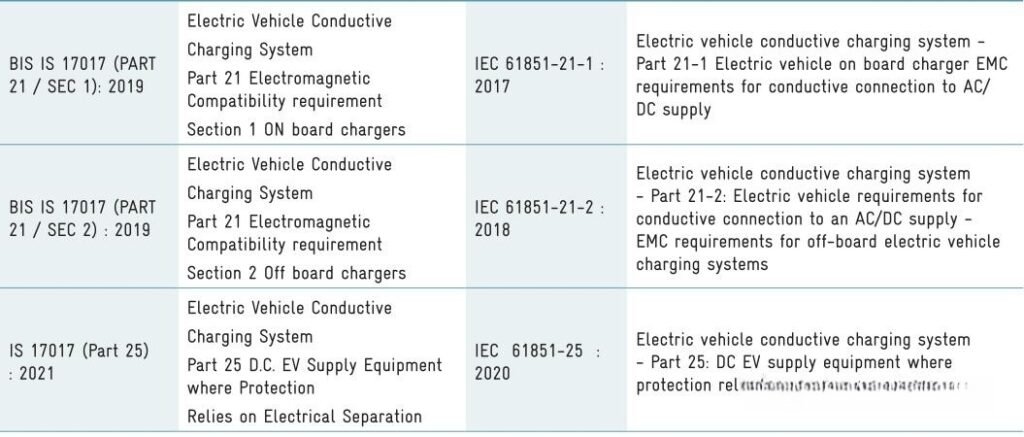
The following is a one-to-one correspondence between Indian standards and ISO, IEC, and GB/T related standards.
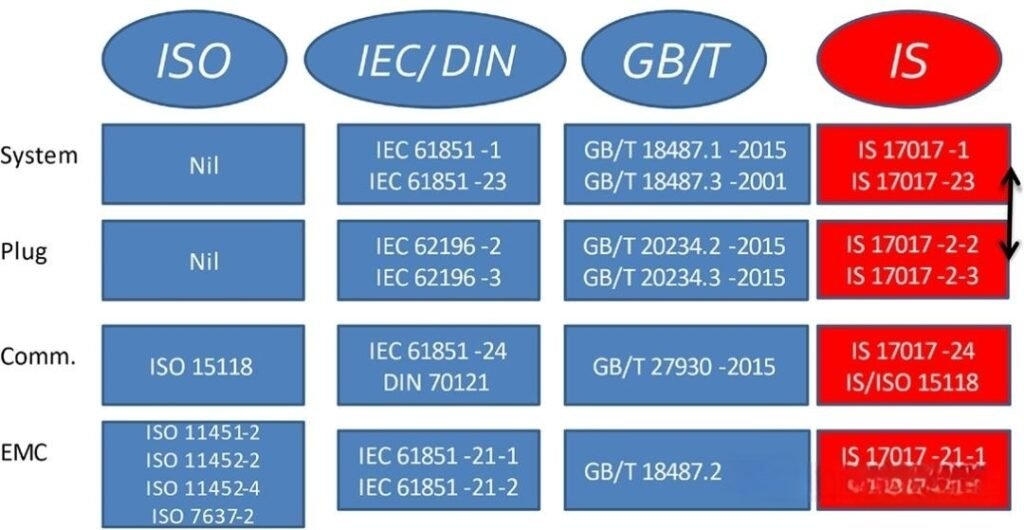
The correspondence between Indian standards and other standards
ISO standards are only used for communication and EMC requirements of EVCS. The standard requirements for system performance and the types of EV plugs used are also universal in countries such as the United States, Japan, Europe, Germany, China, and India. The requirements mentioned in IEC 61851-1, GB/T 18487.1, and IS 17017-1 are equivalent. IEC 61851-3, GB/T 18487.3, and IS 17017-23 are also equivalent.
For the type of EV connector used, the requirements of IEC 62196-2 and IEC 62196-3 are equivalent to China’s GB/T 20234.2 and GB/T 20234.3, as well as India’s IS 17017-2-2 and IS 17017-2-3, respectively. The requirements mentioned in IEC 62196-1, GB/T 20234.2, and IS 17017-2-2 standards are the same. Similarly, the requirements specified in IEC 62196-2, GB/T 20234.3, and IS 17017-2-3 are also the same.
Except for Germany and Japan, the communication requirements for electric vehicle control systems in various countries are universal and follow the ISO 15118 series standards. The IEC, GB/T, and IS standards of countries such as the United States, Europe, China, and India are also directly adopted (i.e. with the same requirements). Germany and Japan respectively adopt DIN 70121 and CHAdeMO standards as communication requirements for electric vehicle control systems. IEC 61851-24, GB/T 27930, and IS 17017-24 are equivalent, while the ISO 15118 series of standards provides universal requirements for all countries.
The EMC requirements for EVCS are provided in the IEC 61851-21-1 and IEC 61851-21-2 standards. These standards are derived from ISO 11451-2, ISO 11452-2, ISO 11452-4, and ISO 7637-2 standards, and also include EVCS applicable to all countries. China’s GB/T 18487.2 is a separate EMC standard, which is based on the requirements provided in IEC 61851-21-1 and IEC 61851-21-2 standards. The IS 17017-21-1 and IS 17017-21-2 standards in India are equivalent to the IEC 61851-21-1 and IEC 61851-21-2 standards, respectively.
Due to the relatively relaxed requirements for electric vehicle charging stations in India and the severe lack of charging infrastructure in the country. Therefore, main charging stations that meet one of the above standards can be sold and operated in India. This can be seen from the charging station specifications of the previous operator.
It should be noted that Tesla’s NACS standard has not been recognized in India at present.
#04
For remote electric vehicles, the fast charger should be equipped with two charging stations with a minimum rated power of 100 kW (200-750 V or higher) and any other fast charger approved by CCS, CHAdeMO, or BIS. It can be seen that CCS Type 2 and CHAdeMO are being promoted for fast charging EVCS and Bharat AC-001 for slow charging EVCS in India. For India’s public charging standards, the CCS method is adopted as the minimum standard for EVCS, and the Indian market is also open to adopting any other standards. DHI also recommends using CCS combo Type 2 for FC of 4-W EV and CHAdeMO for heavy-duty trucks.
Based on the type of charging socket and the digital charging communication protocol used, various EVs adopt four main charging methods, namely Bharat EV Charger (BEVC), CCS, GB/T, and CHAdeMO. BEVC-DC 001 and BEVC-AC 001 are respectively used for DC EVCS charging stations and AC EVCE charging stations.
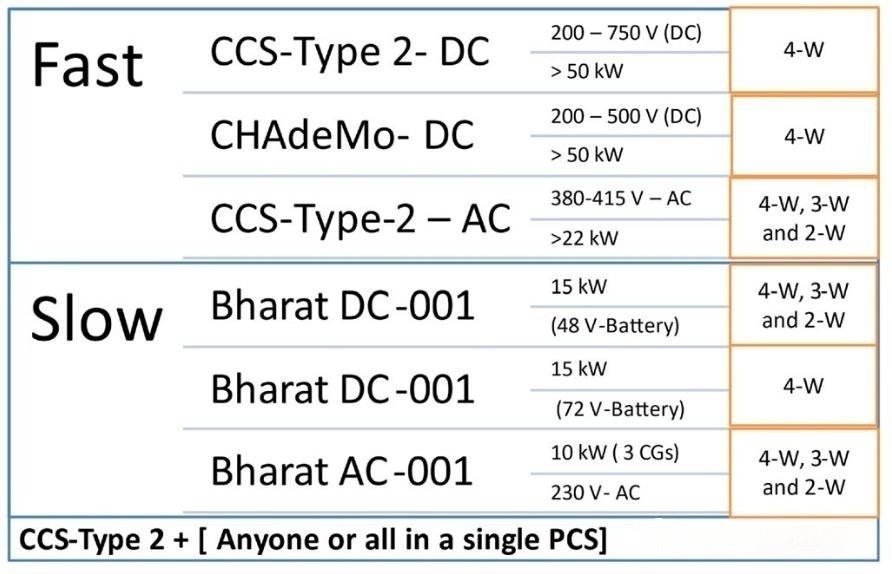
Requirements for EVCS in India issued by the Indian government’s Ministry of Electricity
From the figure below, it can be seen that BEVC uses the GB/T method and has a lower rated power limit compared to other methods. The BEVC-DC 001 developed by DHI has lower voltage and power (72 V and 15 kW). The electrical rating of Level 2 BEVC-DC 001 specification will be adjusted to 150 kW and 1000 V. The communication between EVSE and Central Management System (CMS) is a universal global standard, known as Open Charging Point Protocol (OCPP). It can control charging rate, billing, etc. based on the availability of mains power.
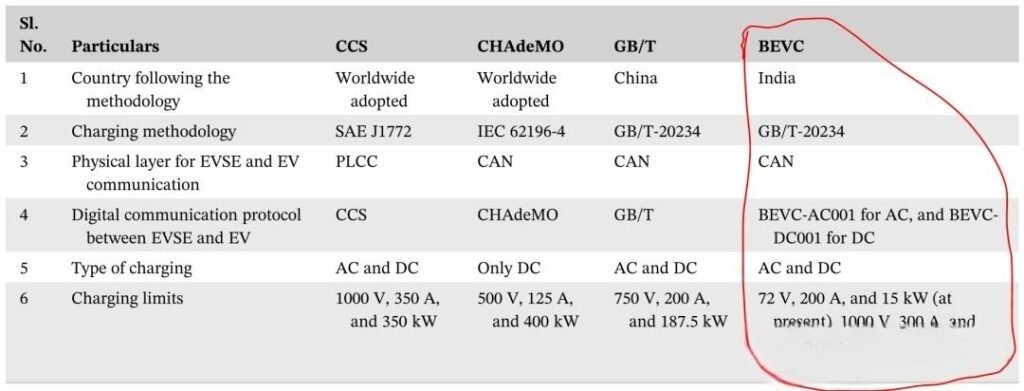
The main charging methods of BEVC
#05
Overall, the charging standards in India mainly have the following characteristics:
1. Besides having their own charging standards, they have a relatively high tolerance for other charging standards.
2. Multiple standards cannot form a unified national market, making management difficult.
3. CCS2 standards are widely used.
4. The charging standard is basically in a following state.