
In today’s era of rapidly developing electric vehicles (EVs), high-power EV charger, as energy supply stations for EVs, are becoming increasingly prominent in terms of importance. With the advancement of technology, the charging voltage has gradually increased from several hundred volts initially to 800V or even higher at present. This trend has sparked extensive discussions: what challenges do high-power EV charger face, and can they eventually be widely adopted? This article will conduct an in-depth exploration of this topic from multiple dimensions, including technology, cost, social impact, and future development.
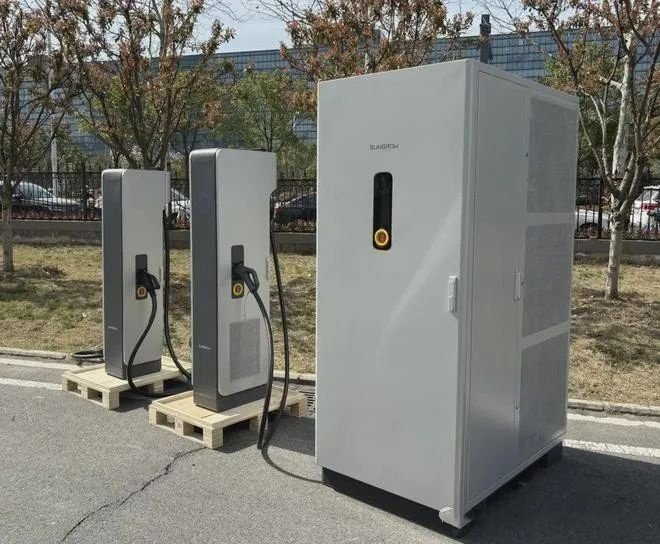
Technical Challenges of 800V EV Charger
The technical challenges of 800V EV charging piles mainly include the complexity of high-voltage system design, thermal management challenges, and issues related to current and power loss.
Complexity of High-Voltage System Design
- Insulation and Safety: Compared with the traditional 400V system, the 800V system has a higher requirement for insulation distance, which needs to reach 4mm. This increases the quality and cost of materials, thereby affecting the overall production expenses.
- Component Size and Material Selection: In the 800V system, the sizes of connectors and copper busbars must be increased to meet the new insulation standards. At the same time, more high-voltage-resistant materials need to be used to ensure stability and safety under high-voltage operation.
Thermal Management Challenges
- Heat Dissipation Requirements: During high-power charging (e.g., 480kW), the equipment may generate heat up to 200°C. Traditional air-cooling systems may fail to meet the cooling needs, so liquid-cooling systems need to be introduced to ensure the normal operation of the equipment under high power.
- Heat Monitoring and Management: For the thermal management system, real-time temperature monitoring and corresponding measures are essential. Some high-end charging piles have integrated temperature sensors, which can automatically adjust the flow rate of cooling liquid during the charging process.
Current and Power Loss Issues
- High Current Problems: The higher the current, the larger and heavier the current-carrying cables need to be. This increases the wire diameter and weight, which in turn raises costs and makes it inconvenient for personnel to operate. In addition, according to Joule’s Law (Q=I²Rt), the higher the current, the greater the power loss. The loss is manifested in the form of heat, which also increases the pressure on thermal management.
To sum up, the technical challenges of 800V EV charger mainly involve high-voltage system design, thermal management, and current/power loss. These issues need to be addressed through technological innovation and optimized design in practical applications.
Analysis of Cost Factors
The cost factors of 800V EV charger mainly include equipment costs, construction and installation costs, and potential operation and maintenance costs.
Equipment Costs
800V EV charger require higher-power charging modules and related hardware equipment, such as motors, chips, contactors, and circuit breakers, and the cost of these hardware is relatively higher. In particular, the charging module, as the core component of the charger, can account for a large proportion of the total cost of the charger. Due to the need for higher power and more complex liquid-cooling systems in 800V EV charger, the cost per kilowatt is relatively higher, showing a significant increase compared with ordinary charger.
Construction and Installation Costs
The construction cost of charger includes civil engineering, power distribution facilities, and installation fees. Due to its high power, 800V EV charger have higher requirements for supporting power grid projects and civil engineering, so the construction cost will increase accordingly. The installation location, power facility renovation fees, and equipment costs also affect the construction and installation costs of 800V EV charger. For example, if the installation location requires road closure for construction or the power line layout is long, additional costs will be incurred.
Operation and Maintenance Costs
The daily operation and maintenance of charging piles are also important cost factors. Due to its high power, the 800V EV charger may have relatively higher power consumption and operation and maintenance costs. The operation and maintenance fees include labor costs for charger maintenance, management, and customer service, as well as equipment maintenance costs such as repair materials and repair labor. These fees vary according to the actual situation of the charger and the maintenance cycle
To sum up, the cost factors of 800V EV charger mainly include equipment costs, construction and installation costs, and operation and maintenance costs. These cost factors are all affected by a variety of elements, such as the power and type of the charger, its installation location, the need for power facility transformation, and the operation and maintenance cycle.
Social Impacts of 800V EV Charger
The social impacts of 800V EV charger are mainly reflected in aspects such as power grid load, charging efficiency, technological advancement, and industrial development.
- Imposing Burden on the Power Grid: 800V EV charger have relatively high charging power. If multiple vehicles in the same area conduct fast charging simultaneously, it may pose a risk of power grid overload and even cause temporary voltage dips in the grid. In addition, the large-scale integration of 800V EV charger requires upgrades and transformations to the existing distribution network to meet electricity demand, which presents challenges to power grid planning and upgrading.
- Improving Charging Efficiency: 800V EV charger can significantly increase the charging speed of electric vehicles, thereby addressing the issue of range anxiety for EV users. For consumers, this is a great convenience that can greatly enhance the usage efficiency and satisfaction of electric vehicles.
- Driving Technological Progress and Industrial Development: The promotion and application of 800V EV charger will drive continuous advancement in electric vehicle charging technology. At the same time, it will also promote the development of related industries, such as the power, electronics, machinery, and communications sectors. As the market for 800V EV charger continues to expand, these related industries will also embrace new development opportunities and growth drivers. Moreover, the 800V charging platform represents advanced architecture, which will bring significant improvements in lightweight design and energy consumption, and has epoch-making significance for the overall development of the electric vehicle industry.
- Optimizing Community Environments and Promoting Green Mobility: The construction and operation of EV charger can guide residents to park electric vehicles in designated EV charger areas for charging, avoiding the disorderly parking of vehicles and making community environments cleaner and more organized. Meanwhile, the widespread use of electric vehicles and the convenient service of EV charger will encourage more people to choose electric vehicles as their means of transportation, thereby effectively reducing reliance on traditional fuel-powered vehicles, lowering carbon emissions, and promoting green mobility.
To sum up, the social impacts of 800V EV charger are multifaceted: they not only pose challenges to the power grid but also bring positive effects on charging efficiency, technological progress, industrial development, community environments, and green mobility.
Future Development of 800V EV Charger
The 800V EV charger has broad prospects for future development and will become a key trend in the field of electric vehicle (EV) charging. Below is a detailed analysis of the future development prospects of 800V EV charger:
Technological Development Trend
The 800V EV charger represents ultra-fast charging technology with high voltage and large current, and is an important development direction for EV charging technology. As the driving range of EVs improves and the demand for fast charging increases, 800V EV charger will become a rigid demand. According to the White Paper on the Development Trend of Charging Infrastructure released by Huawei, the charging voltage for passenger EVs will be upgraded from 500V to 800V, and the single-gun charging power will also increase significantly to shorten charging time and bring the experience closer to that of refueling a fuel-powered vehicle.
Market Demand and Advantages
The 800V high-voltage fast charging technology can replenish a large amount of electricity for EVs in a short period of time, improving charging efficiency, reducing users’ waiting time, and at the same time increasing the utilization rate of EV charger. The 800V platform can also reduce energy loss to achieve energy conservation, and may be accompanied by more advanced intelligent driving assistance systems and better power performance.
Challenges Faced
The introduction of high-power EV charger imposes higher requirements on the power grid, which needs to have stronger power transmission capacity and voltage stability. However, with the development of smart grids, these issues are expected to be resolved. The cost of 800V batteries and related components is relatively high, requiring greater R&D and design costs—this is also one of the challenges currently faced in popularizing the 800V high-voltage platform.
Industry and Policy Promotion
The rapid development of the EV industry and the government’s active promotion of charging infrastructure construction provide strong support for the construction and operation of high-power EV charger. The government encourages social capital to participate in the investment and operation of charging infrastructure through policy measures such as subsidies and tax incentives. As the EV market continues to expand and technology advances, the cost of EV charger will gradually decrease, and economic benefits will gradually emerge.
Future Outlook
The 800V high-voltage platform is currently in a stage of rapid development. Although there is still a certain distance from large-scale popularization, the general trend of its development will not change. In the future, the 800V high-voltage platform may further develop toward higher voltage levels, such as 1200V. As high-power EV charger with more than 200kW usher in a significant development trend after 2024, 800V EV charger will better meet the fast-charging needs of EVs and promote the further development of the EV industry.
To sum up, the 800V EV charger has broad prospects for future development. Although it faces some challenges, its development prospects are promising under the combined effect of multiple factors such as technology, market demand, and industry and policy promotion